

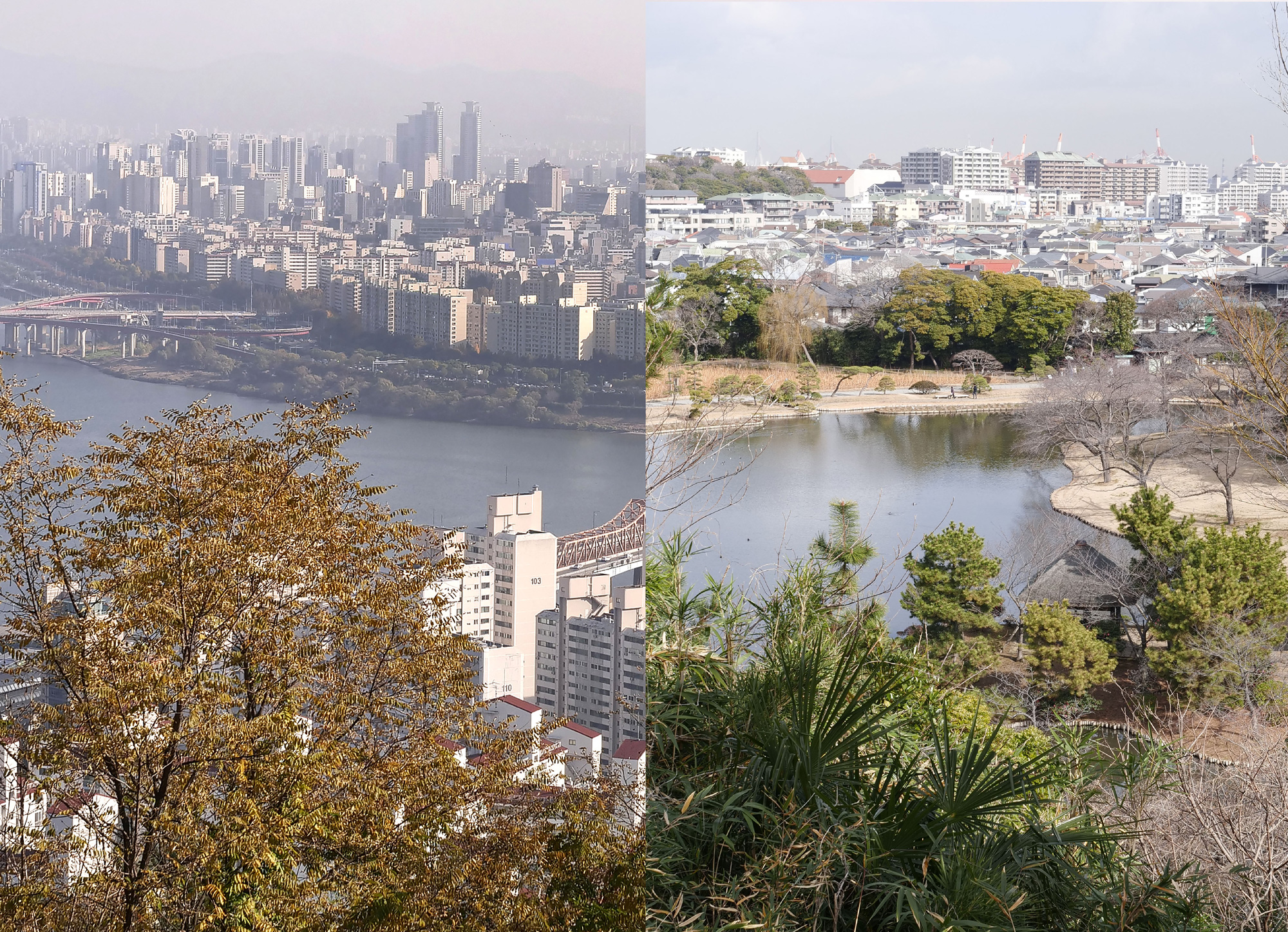
Kamata Yusuke, Key visual for "A Vision for the Two Landscapes"
Opening Dialogues
Opening Dialogues is an annual program in which we join emerging artists in considering the future potential of art and museums, and facilitate trial-and-error efforts. The second program will feature the artist Kamata Yusuke in 2026.
1. Kamata Yusuke, an artist from Yokohama, applies his unique perspective to Hara Sankei
Kamata Yusuke (b. 1984) has researched Japanese houses both in Japan and overseas, producing a body of work that interprets their transnational histories and backgrounds from his own perspective. In this project, in which art, architecture, and urban planning intersect, he focuses on Hara Sankei, a businessman who established Sankeien Garden and had ties to Yokohama and the Yokohama Museum of Art.
2. New installation following research in Yokohama, Gifu, and Seoul
Following research conducted in Yokohama, Gifu, and Seoul since December 2024, Kamata presents a new installation that reveals multiple facets of Hara Sankei’s imagination, shaped by a life that embraced both Japanese tradition and global modernity.
Kamata Yusuke has investigated Japanese houses both in Japan and overseas, including in South Korea, Taiwan, the United States, and Brazil, and has presented architectural installations that foreground the complexities of society and culture. Born and raised in Yokohama, Kamata traces the origin of these activities to his teenage fascination with a group of traditional Japanese structures at Sankeien Garden in Honmoku Sannotani, Yokohama.
In recent years, Kamata has returned to these formative interests through research on the garden’s founder, the business leader Hara Tomitaro (known as Sankei, 1868–1939), who was also a supporter of Nihonga (modern Japanese-style painting) painters. After moving to Tokyo from Gifu Prefecture, Sankei met Yasu, the granddaughter of the industrialist Hara Zensaburo, while teaching at Atomi Girls’ School (now Atomi Gakuen), and married into the Hara family. He expanded the family’s silk business into one of Japan’s most successful enterprises. As both his grandfather and his uncle were Nanga (a style of Japanese landscape painting established in the mid-18th century and influenced by literati paintings from China’s Jiangnan region) painters, he grew up well versed in calligraphy, painting, and Chinese poetry, and at first aspired to become a painter or a scholar. After the Great Kanto Earthquake of 1923, he devoted himself to the reconstruction of Yokohama and cut back his activities as an art patron, while actively pursuing his own art. The Hara general partnership company Hara Gomei Kaisha included a real estate division that carried out residential development in Honmoku, Yokohama, as well as agriculture, forestry, and housing development projects in Seoul, Korea, a place Sankei himself never visited. Kamata came to consider whether a shared imaginative faculty linked Sankei’s highly developed sense of space as a calligrapher, painter, and supporter of the arts with the spatial perspective evident in his approach to urban development.
For the Yokohama Museum of Art, Sankei is a figure of great importance, with connections to Okakura Tenshin (1863–1913, a leading figure in the modernization of Japanese art), and his legacy is one area of focus of the museum’s collecting policy. In 2019, the museum presented “The Eye of a Connoisseur: The Legendary Hara Sankei Collection” to mark the museum’s 30th anniversary. In the context of the present program, Kamata will take this research further by drawing on the Yokohama Museum of Art’s scholarly resources and its collection. He will present installation works, shown in a solo exhibition format, that bring into view the multiple facets of Sankei’s imagination, shaped by a life situated between Japanese tradition and global modernity.
This exhibition will be held concurrently with “Imamura Shiko: A Revolutionary Innovator of Nihonga,” which surveys the career of Imamura Shiko, among the artists supported by Sankei. Linked with a concurrent exhibition of works from the permanent collection, it will be held in one room of the collection exhibition (Gallery 4).
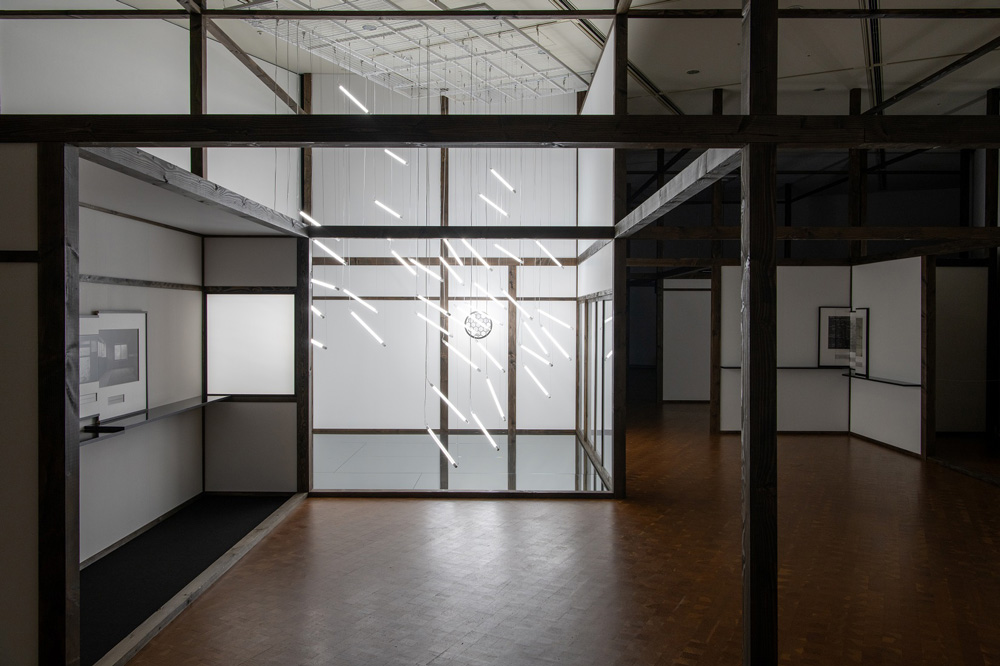
[Reference work]
Yusuke Kamata “Japanese Houses,” 2023
Installation view of the exhibition “Home Sweet Home” at the National Museum of Art, Osaka, 2023
Photo: Fukunaga Kazuo

Research in Seoul, South Korea
photo: Jong YuGyong
New Artist Picks (NAP) was a series of small exhibitions held at the museum between 2007 and 2023. It was organized to introduce highly anticipated and promising young artists.
Developing on the NAP concept, Opening Dialogues is an annual program in which we join emerging artists in considering the future potential of art and museums, and facilitate trial-and-error efforts.
Following the Yokohama Museum of Art’s post-renovation reopening, we have made a fresh start by adopting “diversity” as a keyword, and setting out to address the concept in a way that befits Yokohama. With this philosophy as a foundation, Opening Dialogues was launched in 2025 to implement collaborations between emerging artists and works in the collection, and explore the local and global history of Yokohama, among other things.
By making the most of the special characteristics of the museum collection, which focuses on a wide range of both Japanese and international works dating from the 19th century to the present, we strive to convey the ideas and values of artists who engage with the current era based on a perspective that is unconstrained by an existing context or history in collaborations between artists and the museum.
*( )= Group of 20 or more (pre-booking required)
*Free admission for high school and younger students with valid ID on every Saturday.
*Visitors with disabilities and one caregiver accompanying them are admitted free of charge (Please present a certificate at the entrance).
*The ticket for the
“Imamura Shiko: A Revolutionary Innovator of Nihonga” also gives admission to the Collection Exhibition and Opening Dialogues for the same day.
*Visitors can also enjoy the ongoing Collection Exhibition in Jiyu Area(free admission).
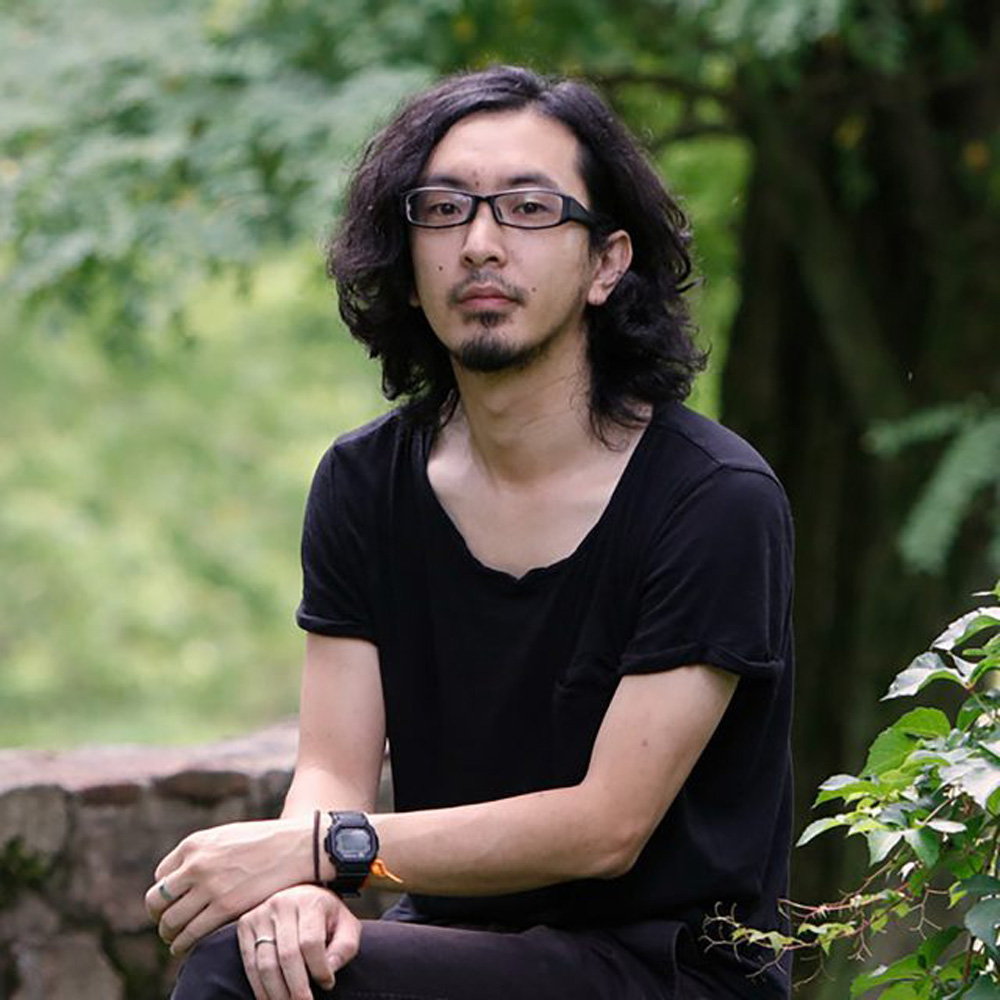
Born in Yokohama in 1984. Completed graduate studies in the Department of Intermedia Art at Tokyo University of the Arts in 2013. Currently based in Yokohama and Tokyo. In 2024, he conducted research on Hara Sankei with support from an ACY (Arts Commission Yokohama) artist fellowship.
【Selected Exhibition】
2019 New “Artists Today” Exhibition 2019 “The Ongoing Dialogue,” Yokohama Civic Art Gallery
2022 Busan Biennale 2022 “We, on the Rising Wave,” South Korea
“Spinning East Asia Series II: A Net (Dis)entangled,” CHAT, Hong Kong
2023 “Geopoetics: Changing Nature of Threatened Worlds,” National Taiwan Museum of Fine Art
“Home Sweet Home,” The National Museum of Art, Osaka (touring to Marugame Genichiro-Inokuma Museum of Contemporary Art in 2024)
2024 “You don't remember anymore,” Yonago City Museum of Art, Tottori
2025 “No Boundaries,” The National Museum of Art, Osaka


